
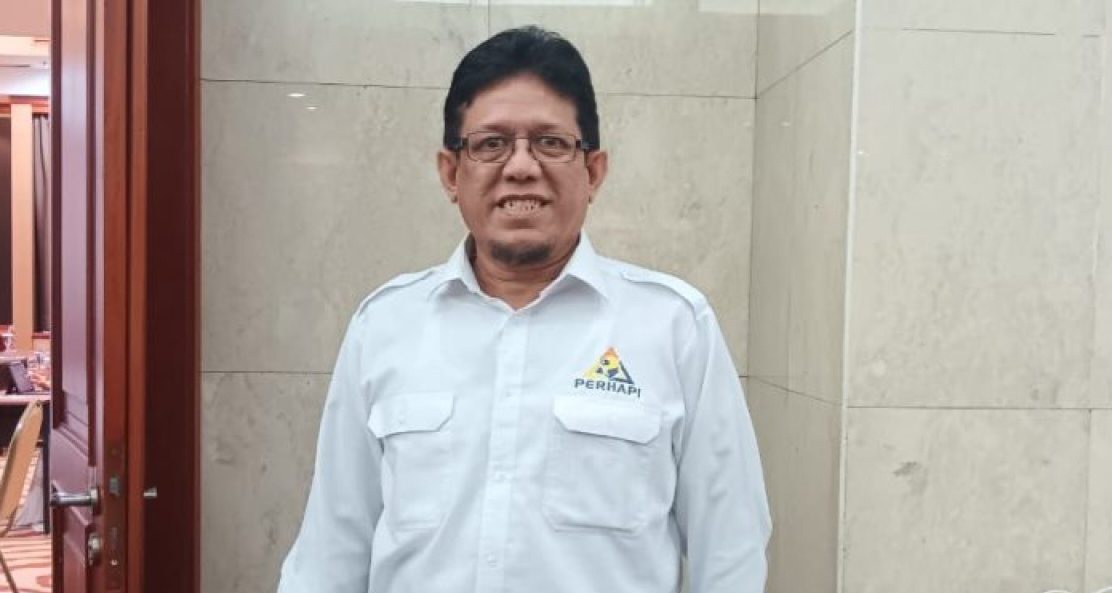
Responding to the widespread practice of illegal mining (PETI), Chairman of the Indonesian Mining Experts Association (PERHAPI), Rizal Kasli, stated that addressing the issue requires commitment and consistency in law enforcement from law enforcement authorities (APH), including the Indonesian Armed Forces (TNI), National Police (POLRI), and the Prosecutor’s Office, as well as local governments and communities. The consequences of illegal mining will ultimately be felt by the surrounding regions and communities.
“However, in enforcing the law, local governments should also consider alternative economic sources of income for these miners. Especially amid the current economic uncertainty, they urgently need income security to support their families,” Rizal said, as reported on Sunday, September 13, 2026.
He said that providing decent alternative employment must be considered so that illegal miners can stop conducting illegal mining activities in the areas concerned.
“The transition to alternative employment should be accompanied by assistance, starting with training, access to capital, operations, marketing, and customer services,” he said.
In addition, Rizal said that local governments could propose People’s Mining Areas (WPR) in areas with potential mineral resources, provided that research and exploration have been conducted and the proposed areas do not overlap with the IUP-OP areas of companies holding official mining permits.
“WPR proposals can be submitted for approval to the Minister by the Governor. The government must provide guidance to holders of People’s Mining Permits (IPR) so that they continue to follow Good Mining Practices (GMP) and ensure that environmental protection is properly maintained,” he explained.
He emphasized that areas that have already been disturbed, damaged, or contaminated with hazardous and toxic materials (B3) must immediately undergo reclamation, rehabilitation, and, where pollution has occurred, remediation.
“It is the government’s obligation to carry this out if the illegal mining activities are not processed through legal action. In this case, both local and central governments must allocate funding for this purpose. Otherwise, it will affect public health and safety, including health problems, disease, landslides, and flooding.
“Therefore, local and central governments must take action against illegal mining operations wherever they exist within their respective jurisdictions. The exception is officially permitted mining activities under IPR, which should instead be properly supervised and supported through government guidance,” he concluded.


