
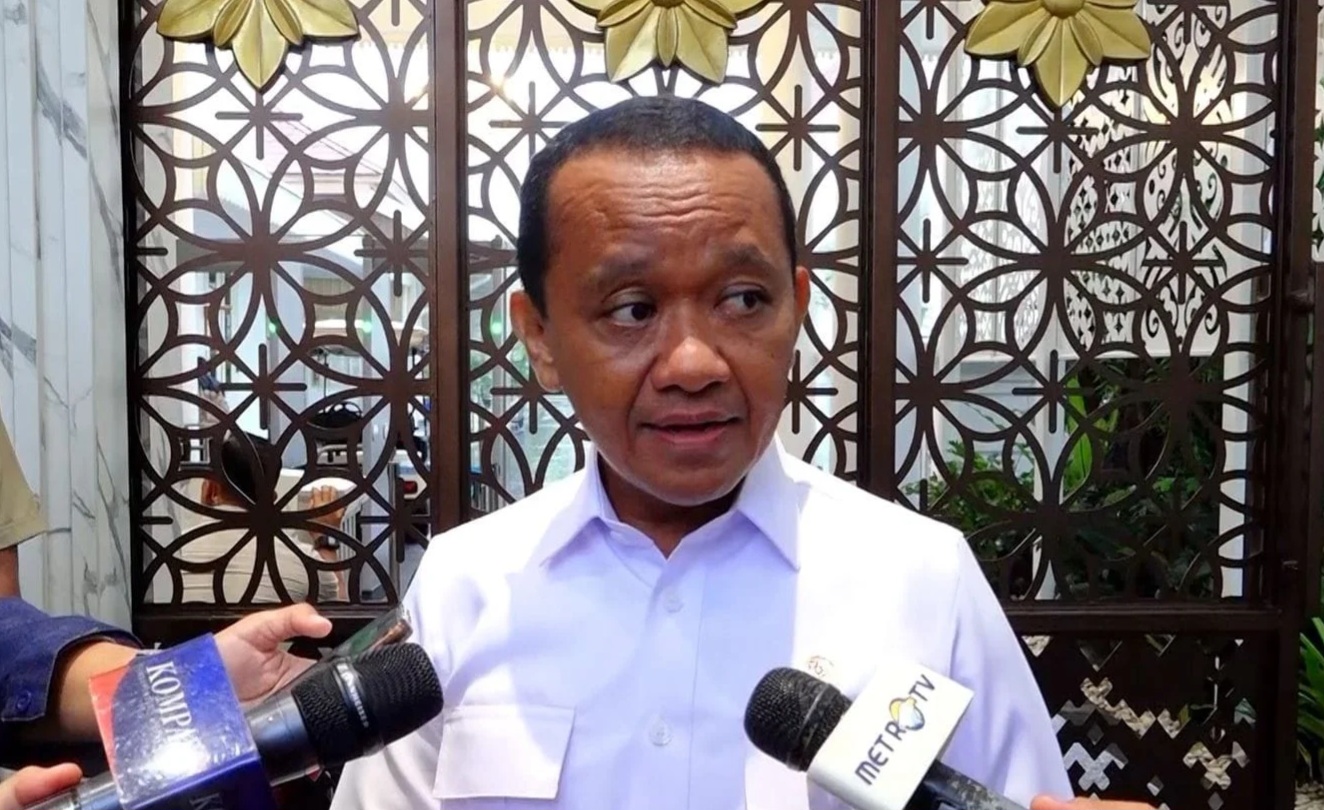
Minister of Energy and Mineral Resources (ESDM), Bahlil Lahadalia said Indonesia’s coal governance policies now play an important role in determining prices in the global market. He said the government had reorganized the supply and demand framework for mining commodities to strengthen the position of Indonesian coal prices in international markets.
He emphasized that efforts to improve supply efficiency by controlling coal production through the Work Plan and Budget (RKAB) had begun to restore the standing of national coal prices in the global market.
He added that the policy had proven effective in increasing state revenue, even though coal production volumes were not pushed excessively.
“Nickel prices are determined from abroad. Coal prices are determined from abroad. Now we are starting to put things in order. Thank God, through better management of supply and demand, Indonesian coal prices are now beginning to regain their standing in the international market,” Bahlil said in his remarks at a blood donation event commemorating the 81st anniversary of the mining sector at Balai Sudirman in Jakarta, as quoted on Tuesday, September 22, 2026.
He said Non-Tax State Revenue (PNBP) from the mining sector had increased beyond the 2025 figure, despite production being lower. The government, he said, is prioritizing the optimization of state revenue rather than simply pursuing production-volume targets.
“A report from the Director General of Mineral and Coal Mining to me said that coal production is not as high as it was in 2025, but PNBP is higher than in 2025. This means we do not want production to be excessively high; what matters most is state revenue,” he said.
He also said that improved mining governance was intended to provide protection and promote a more equitable playing field for micro, small, and medium-sized enterprises (MSMEs). MSMEs account for 61% of national GDP and proved to be a pillar of the economy during the 1998 financial crisis, when inflation reached 88% and the deficit stood at 13%.
“And the assets of these MSMEs, when something happens, are never taken abroad. During the 1998 economic crisis, ladies and gentlemen, our deficit was 13% and inflation was 88%. What served as the backbone of our national economic resilience? Was it large corporations? No. It was MSMEs,” he said.
The Ministry of Energy and Mineral Resources facilitates RKAB applications for smaller and medium-sized businesses with quotas of 200,000 tons, 700,000 tons, and up to 1 million tons. The quota management policy is intended to ensure the government plays a role in maintaining a balanced competitive environment between large companies and smaller businesses.
“MSMEs are also involved in mining now, right? Those applying for RKAB quotas of just 500, 200,000, 700,000, or 1 million tons are MSMEs. If one company controls a huge share, I would rather see many people making a living than have one person holding all the power,” he concluded.


